
You've been dreaming about your renovation for years. The mood board is finished. You can picture the new kitchen, the fresh paint, and the first morning coffee in your completed home.
But then you start hearing stories.
A friend's renovation went over budget. Someone at a barbecue mentions their project took six months longer than expected. Suddenly, that excitement starts to mix with uncertainty.
One of the biggest concerns homeowners have when starting a renovation is losing control of their budget and timeline.
And often, that fear comes down to one word:
Variations.
What is a variation?
A variation is simply a formal change to your building contract.
It records when something changes from the original agreement, whether that is a change to the scope of work, materials, price, or construction timeline.
Variations are a normal part of construction, especially with renovations.
Every existing home is different. Once walls are opened up and construction begins, unexpected conditions can sometimes appear. Homeowners also often make changes as they see their project come to life.
The purpose of a variation is not to create uncertainty. It is to make sure everyone understands what has changed, what it costs, and how it affects the project.
A well-managed variation is not a problem. It is simply a clear record of a decision.
The problem is not the variation. It is the surprise.
Most homeowners don't have an issue with paying for something they choose or understand.
The frustration comes when a change happens without clear communication.
For example, imagine you're walking through your home during construction and decide you would like to move a power point or upgrade your tile selection.
If that change is made without a formal discussion, there can be confusion later.
You might assume it was included in your original contract. Your builder might assume you understood it would be an additional cost.
Neither side intended for there to be a problem, but without a clear process, misunderstandings can happen.
A professional builder understands that your building contract is there to protect both parties. It outlines the agreed scope of work, the price, and the expectations for the project.
When something changes, the contract should change with it.
A good variation process looks like this:
"Here is what has changed. Here is the cost impact. Here is how it may affect the timeline. Would you like to proceed?"
This gives you the information you need to make a decision before any extra work begins.
When do variations happen?
Variations generally fall into three categories.
1. Changes you choose
These are the most common type of variation.
Your preferences can change as you see your home come together. Maybe you decide to upgrade your appliances, change your flooring selection, add additional lighting, or adjust a room layout.
These changes are completely normal. The important part is understanding the cost and timing impact before moving forward.
2. Unexpected site conditions
Renovations can involve working with an existing structure that has been hidden for many years.
Once demolition begins, your builder may discover issues that could not have been identified beforehand.
This could include damaged timber framing, unexpected plumbing issues, or structural repairs.
These situations cannot always be predicted, but a clear variation process ensures you understand the options before any additional work takes place.
3. Changes outside everyone's control
Sometimes external factors can affect a project.
For example, a supplier may discontinue a product, a council requirement may change, or a specific material may no longer be available.
In these situations, a variation allows the project to adapt while keeping everyone informed.
Fixed Price Contracts: What does "fixed price" really mean?
One of the most common questions homeowners ask is:
"If I have signed a fixed price contract, why does it say the price can change?"
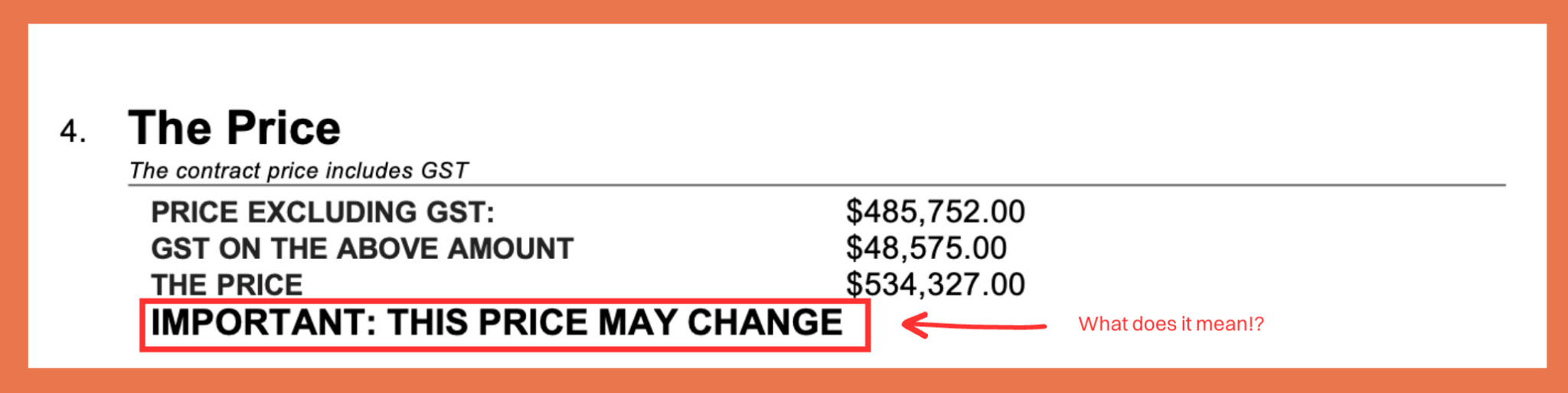
It is a fair question.
When you hear the words "fixed price", it is natural to assume the amount you sign at the beginning is the exact amount you will pay at the end. However, construction is a process that involves many moving parts, and a contract needs a way to manage changes that occur after it has been signed.
A fixed price contract is designed to give you certainty around the agreed scope of work. It means your builder is responsible for delivering what has been included in the contract for the agreed price. You are not exposed to additional costs caused by poor estimating, inefficient work, or mistakes within the builder's control.
However, a fixed price contract cannot predict every possible change that may happen during a building project.
For example, you may decide to upgrade your kitchen appliances, change your flooring selection, or add extra lighting after the contract has been signed. Alternatively, construction may uncover something unexpected, such as hidden structural issues or conditions that could not have been identified before work began.
In these situations, the contract needs a process to manage those changes fairly. This is where variations come in.
Without a variation process, the contract would have no way to manage changes. Any request outside the original agreement would either need to be rejected or handled without a clear record of what was agreed.
That would not protect either party.
A properly managed variation ensures everyone understands the same information before work proceeds. It records what has changed, the cost impact, and any effect on the construction timeline.
It is also important to understand that variations are not a way for builders to increase the price whenever they want. A professional builder should only raise a variation when there is a genuine change to the original agreement.
In most well-managed projects, builders spend significant time during the design and planning stages reducing uncertainty before construction begins. This helps minimise avoidable changes later.
However, homeowners' preferences can naturally evolve as they see their home take shape. A variation process allows those changes to happen in a structured way while keeping the project transparent.
The warning about price changes in a fixed price contract is not there to remove certainty. It exists to make sure both the homeowner and builder have a fair process when something changes.
The goal is simple: no surprises, no assumptions, and no decisions made without everyone understanding the impact.
Three ways to minimise variations
While variations are a normal part of building, good planning can help reduce unnecessary changes.
1. Finalise your selections early
The earlier you make decisions on finishes, fixtures, and materials, the easier it is to plan your project accurately.
Changing a tile, tapware selection, or joinery detail during construction can create additional costs and delays.
2. Allow room in your budget
Even with careful planning, renovations can uncover unexpected items or involve changes you decide to make.
Keeping a contingency allowance gives you flexibility if something changes during the build.
3. Make decisions promptly
Construction relies on timing.
If a material becomes unavailable or a decision is delayed, it can affect the construction sequence and create additional costs.
Quick decisions help keep your project moving forward.
How we manage variations at ZJ Building
At ZJ Building, we believe variations should never come as a surprise.
Our goal is to identify as much as possible during the design and planning stages before construction begins. This helps create a clearer plan and reduces avoidable changes during the build.
When something does need to change, we explain what has changed, why it is required, the cost impact, and any effect on the timeline before proceeding.
We take the time to make sure you understand the decision and feel comfortable moving forward.
Good communication is what turns variations from a stressful experience into a simple part of managing your project.
Stay in control of your renovation
Variations are not something homeowners should fear. They are simply part of building a unique home.
The difference comes down to how they are managed.
With the right process, clear communication, and a builder who keeps you informed, you can make decisions confidently without unexpected surprises.
If you're planning a renovation or extension and want to understand how we manage budgets, selections, and changes throughout the build, we'd love to have a conversation.